
From Owners to Subjects
The Ownership Wars: Who Owns YouThis flow traces the book’s central argument that economic ownership becomes political domination and finally a demand for collective emancipation.
increasing Bearing strength in each event
 decreasing
Bearing strength in each eventdecreasingThe Unequal Encounter

The Unequal Encounter
A Political Allegory
The book begins with the master–slave dialectic as a model for social hierarchy. Two self-conscious beings meet, struggle, and divide the world between the one who risks everything and the one who submits to preserve life.
The allegory turns immediately toward modern class society. Economic power becomes the contemporary form of mastery, while dependence on wages and institutions becomes a modern form of submission.
The Moral Reversal
The argument matters because it presents domination not merely as coercion, but as a relationship sustained by contrasting attitudes toward risk, power, and survival.
The Ownership Class

The Ownership Class
Concentrated Power
The narrative identifies the richest fraction of society as the Ownership Class. Its power rests on property, capital, inherited advantage, and control of political communication.
The class is described as ruling indirectly, persuading the majority to defend the institutions that enrich it. Ownership therefore becomes not only an economic fact but a worldview imposed on society.
Consent and Dependence
The central tension is that the majority possesses numerical strength yet lacks unified purpose. The book treats consent as the hidden mechanism that permits a small class to govern the many.
The Populist Mask
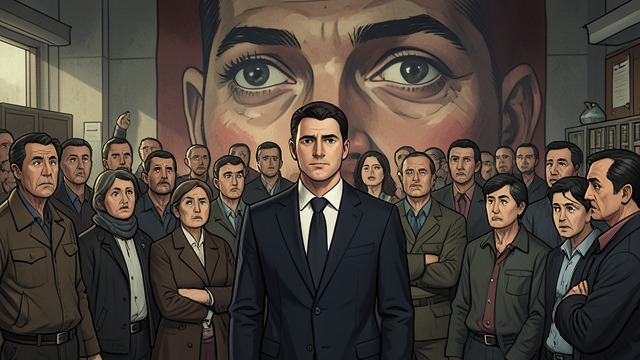
The Populist Mask
The Elite in Disguise
The book’s principal political paradox appears when a billionaire presents himself as an enemy of elites. The narrative insists that this performance depends on narrowing the meaning of elite to cultural and political institutions.
Economic power is thereby separated from public resentment. Supporters can denounce media figures, academics, and politicians while defending the wealthy figure who benefits most from the existing order.
Misdirection
The mask succeeds because it converts class anger into hostility toward rival elites. The book treats this as a perfected form of divide and rule.
The Revolt of the Majority
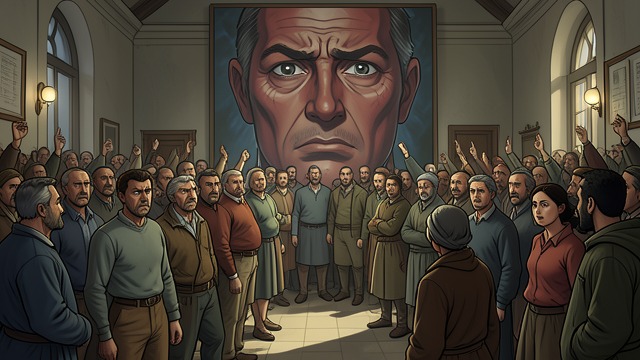
The Revolt of the Majority
A Blocked Coalition
The book imagines workers and the shrinking middle class recognizing their common dependence on capital. Such recognition would recreate the social force that once threatened entrenched elites.
Yet racial resentment, cultural conflict, and partisan spectacle prevent that coalition from forming. People are encouraged to defend relative status rather than challenge absolute inequality.
The Unfinished Revolution
The revolutionary possibility remains present but suspended. The narrative predicts that concentrated wealth and technological displacement will eventually intensify the pressure toward confrontation.
The Meritocratic Horizon
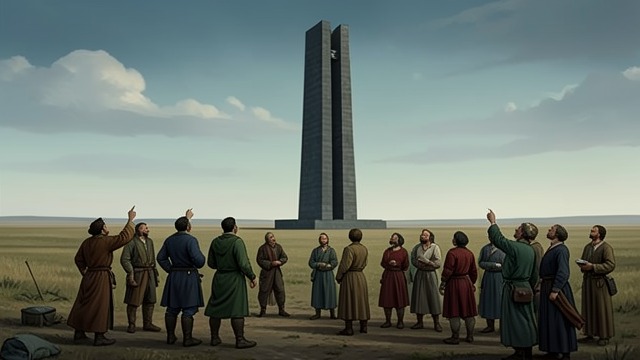
The Meritocratic Horizon
A New Principle
The book proposes meritocracy as the alternative to inherited power. Political and economic institutions should reward ability and public contribution rather than family wealth, privilege, or dynastic continuity.
The proposal is framed as social capitalism rather than orthodox communism. Public authority would regulate markets and direct them toward common flourishing.
A New Human Order
The final horizon is not merely redistribution. It is the deliberate cultivation of intelligence, creativity, and human possibility through collective institutions.
At the opening of the argument
Early in the book
After the discussion of ownership
Near the middle of the political argument
In the concluding political proposals
